Laser cleaning machine
Description
laser cleaning machine 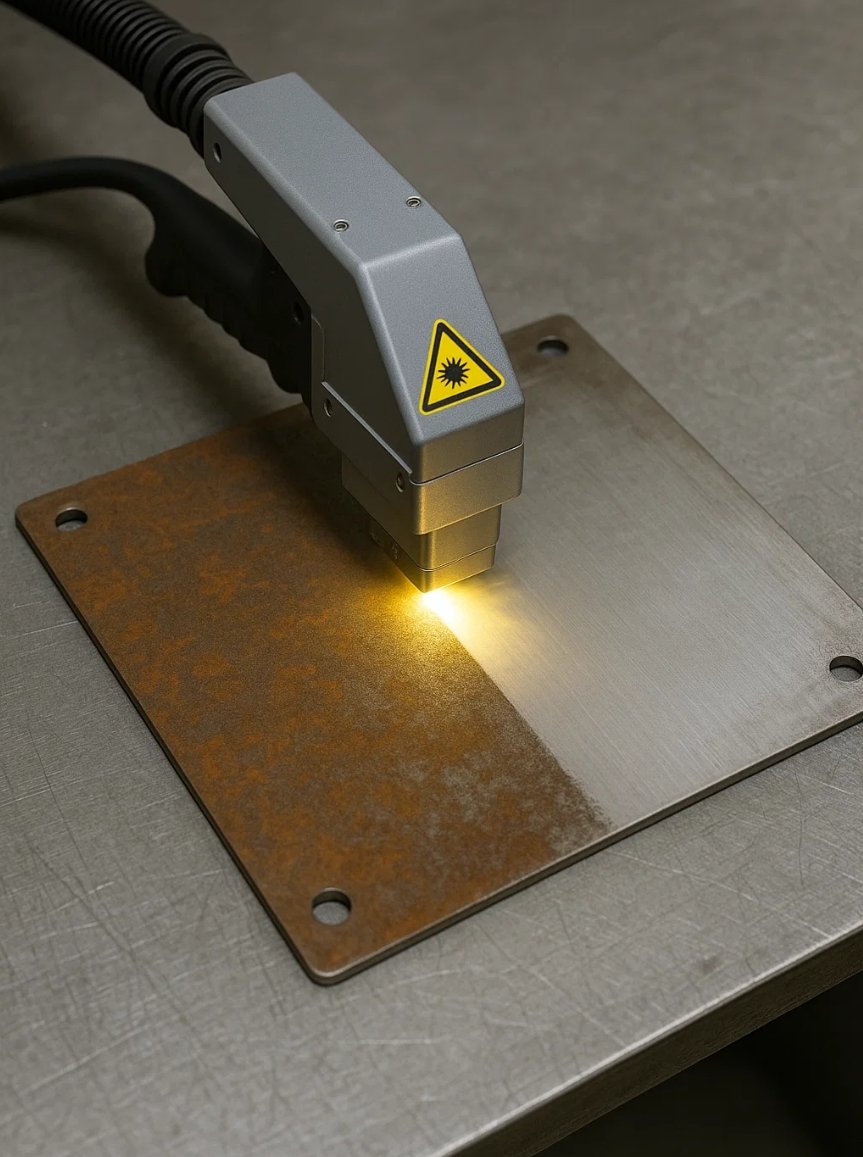
🔹 What It Is
A laser cleaning machine is an industrial tool that uses a high-energy laser beam to remove rust, paint, oil, oxides, and other surface contaminants from metals and other materials. It’s a “green” cleaning method because it avoids chemical solvents and abrasive blasting.
🔹 How It Works
- The laser beam is directed at the target surface.
- The contaminants absorb the laser energy faster than the substrate.
- The contaminants evaporate or are lifted away as plasma/micro-particles.
- The base material remains intact and undamaged.
🔹 Key Features
- Non-contact process – No tool wear or physical force.
- Selective cleaning – Removes rust/paint without harming the base metal.
- Eco-friendly – No chemicals, dust minimized.
- Automation ready – Can be handheld or integrated with robots/production lines.
- Adjustable parameters – Laser power, pulse frequency, and scanning speed can be tuned for different applications.
🔹 Applications
- Rust & oxide removal – e.g. steel parts, pipelines, shipbuilding.
- Paint & coating removal – e.g. automotive maintenance, aerospace.
- Oil & grease cleaning – molds, machinery surfaces.
- Cultural relic restoration – removing dirt without damaging stone/wood.
- Welding prep or post-weld cleaning – ensures strong, clean joints.
🔹 Types
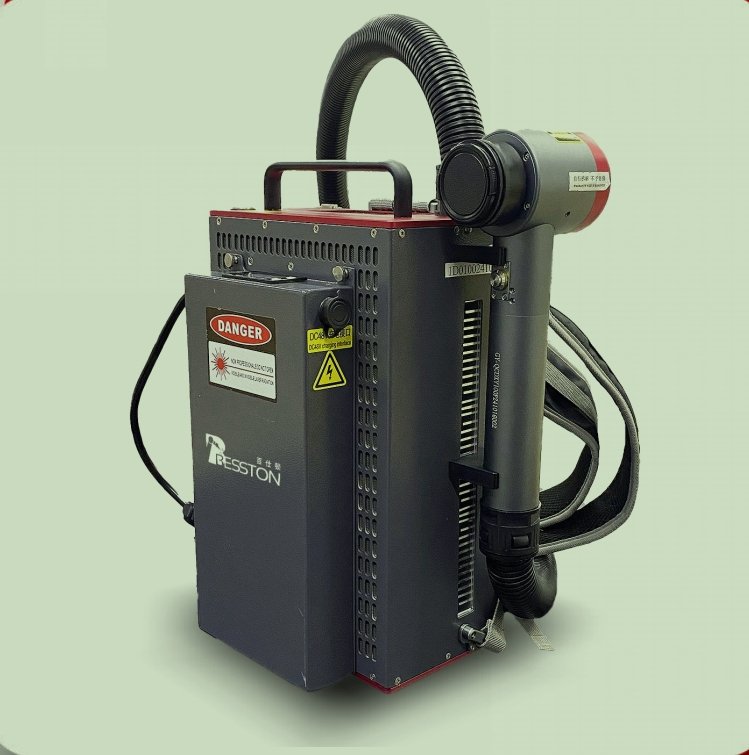
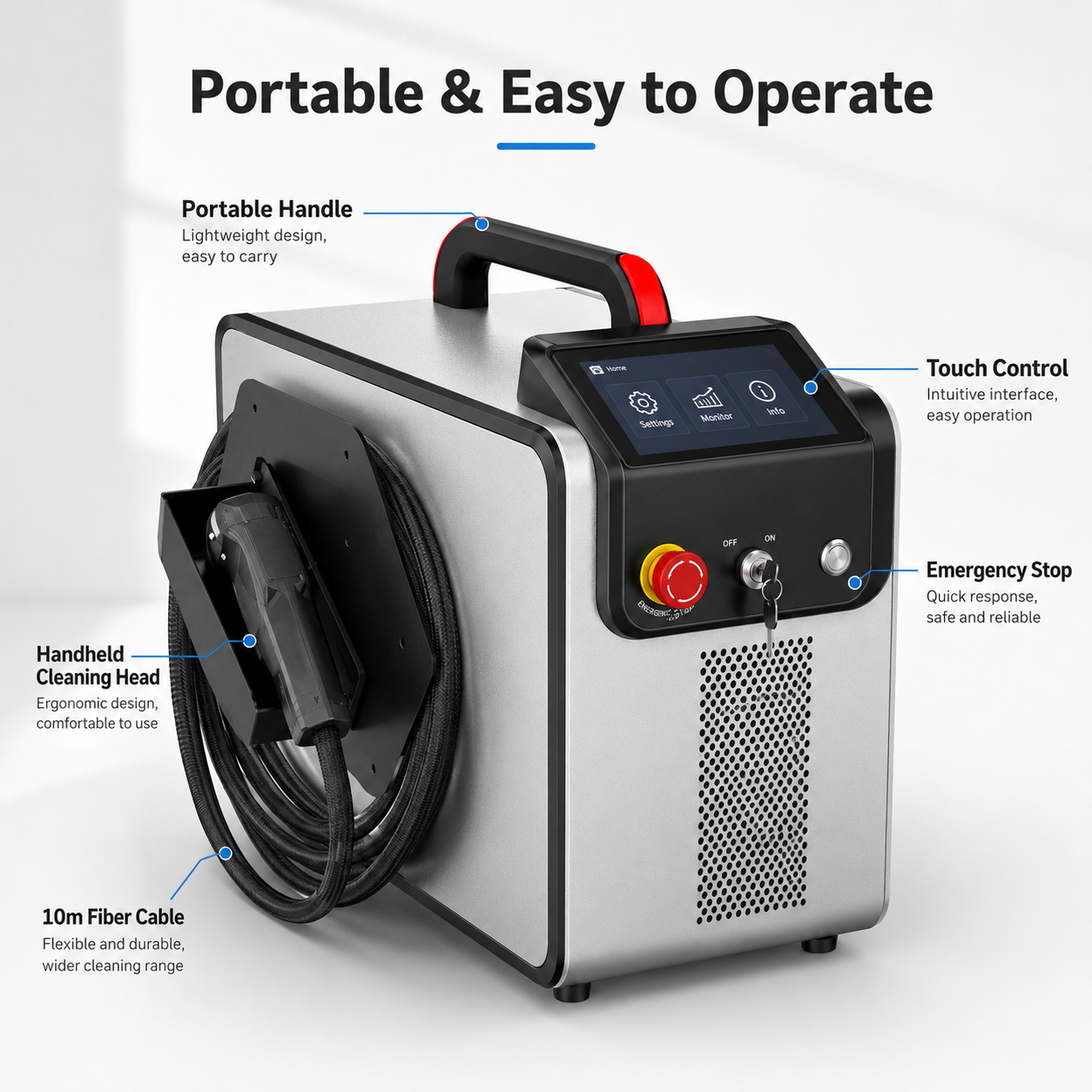
- Handheld laser cleaning machines – Flexible, portable, suitable for workshops and field maintenance.
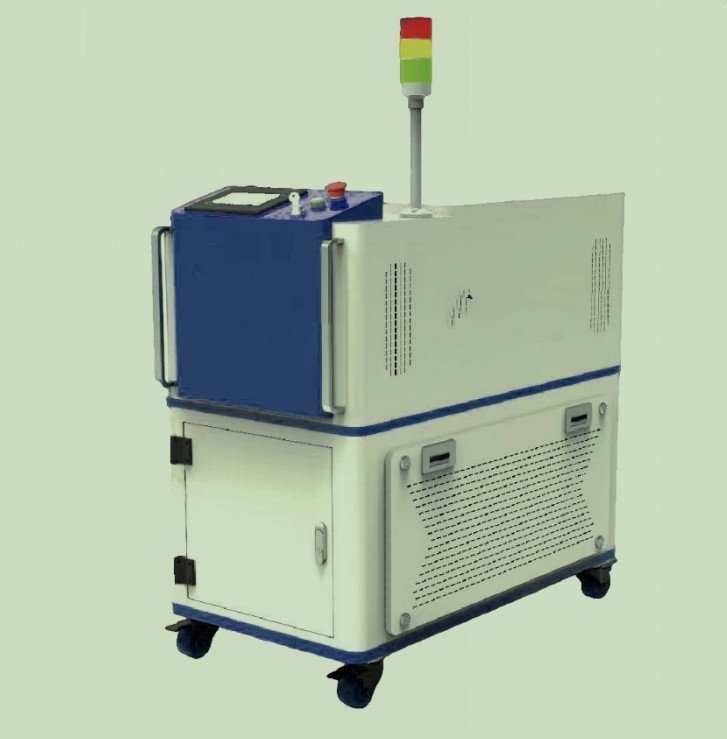
- Stationary/automated systems – For large-scale or continuous cleaning in factories.
- Fiber laser cleaning machines – Most common, reliable, long lifespan.
🔹 Advantages vs. Traditional Cleaning
- Faster and more precise.
- No consumables (sand, chemicals).
- Lower long-term cost.
- Minimal operator safety risks compared to sandblasting or chemicals.