Metal sheet leveling machine

Description
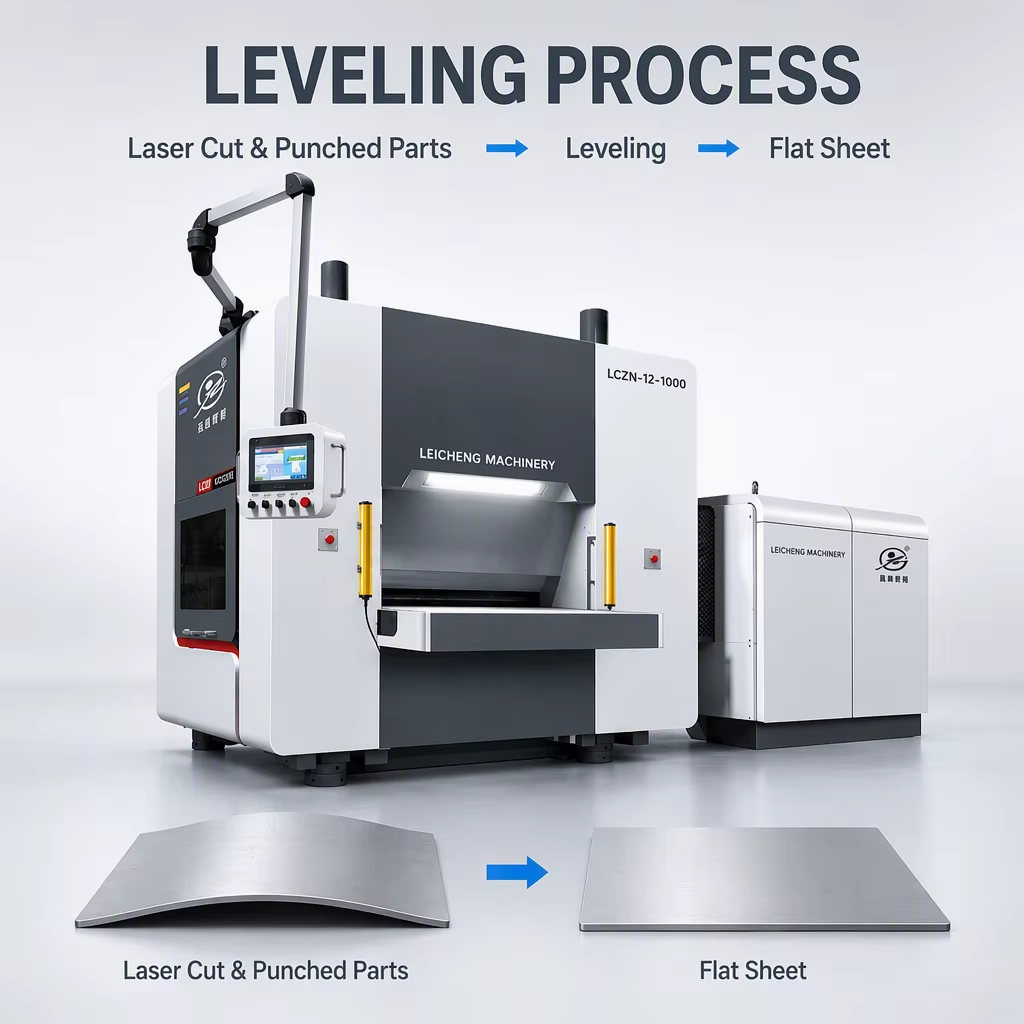
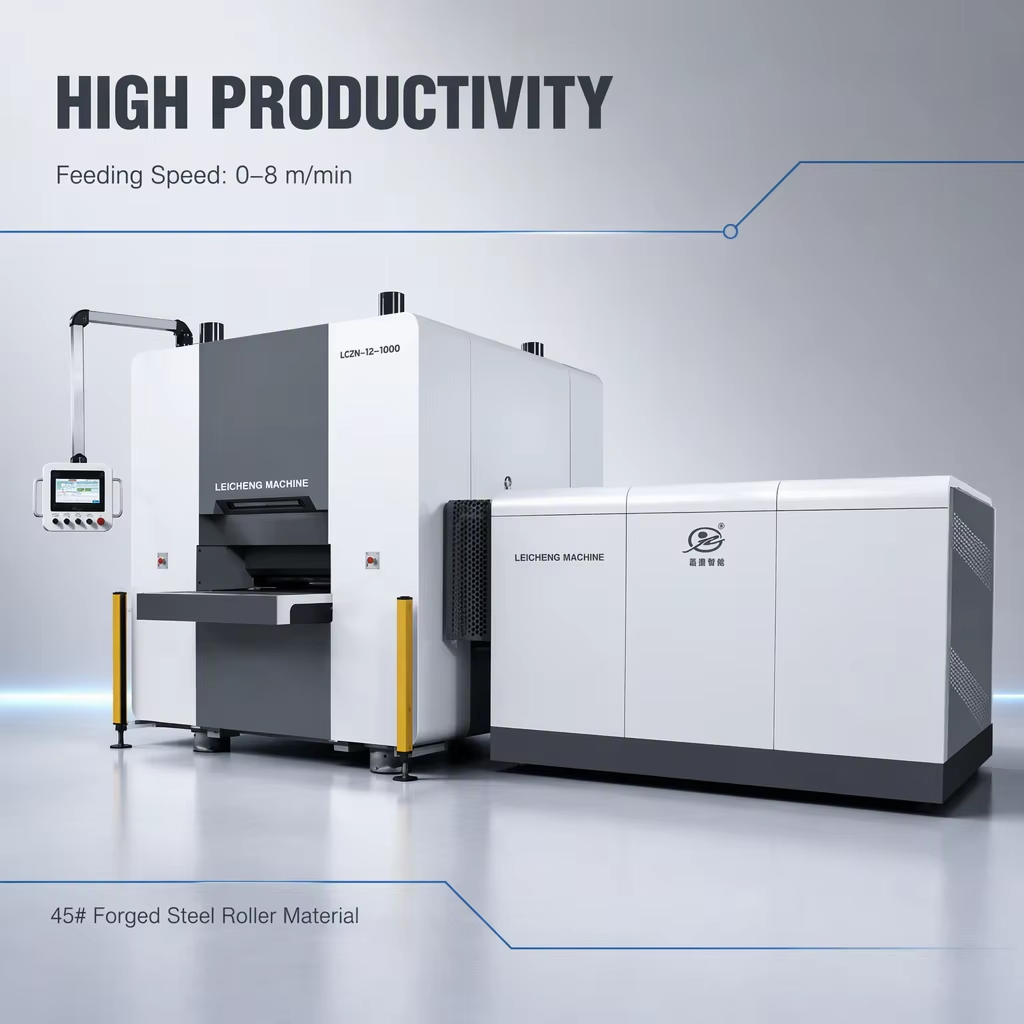
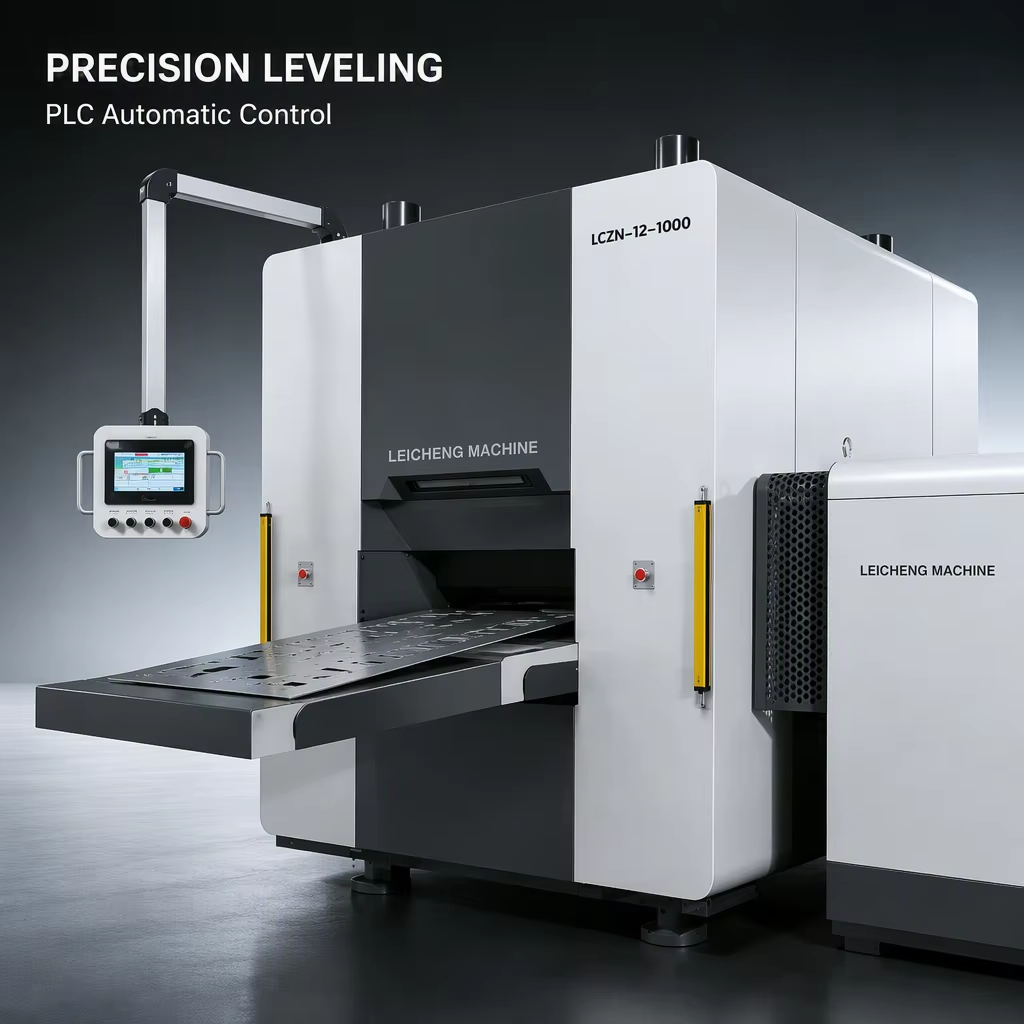
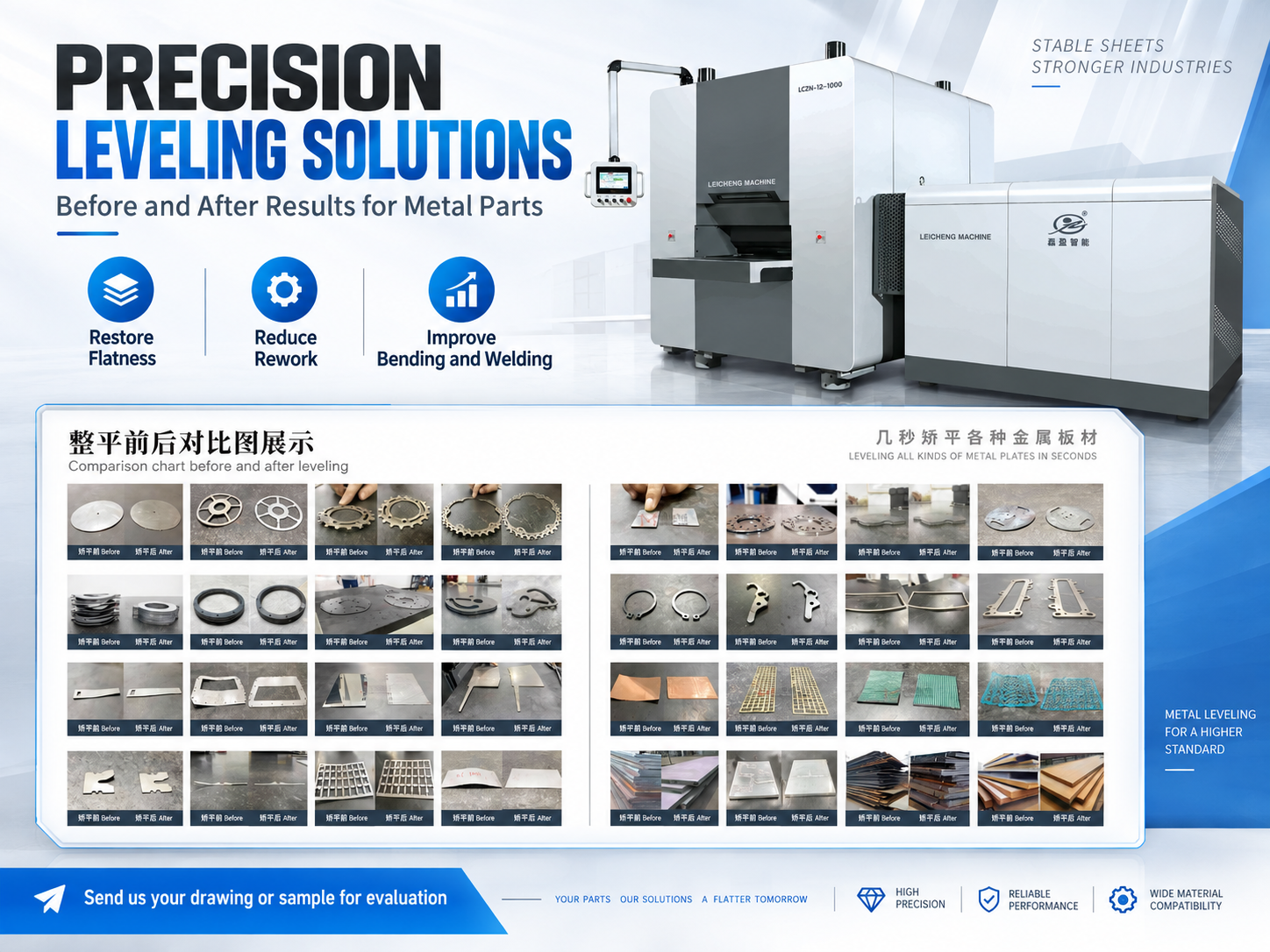
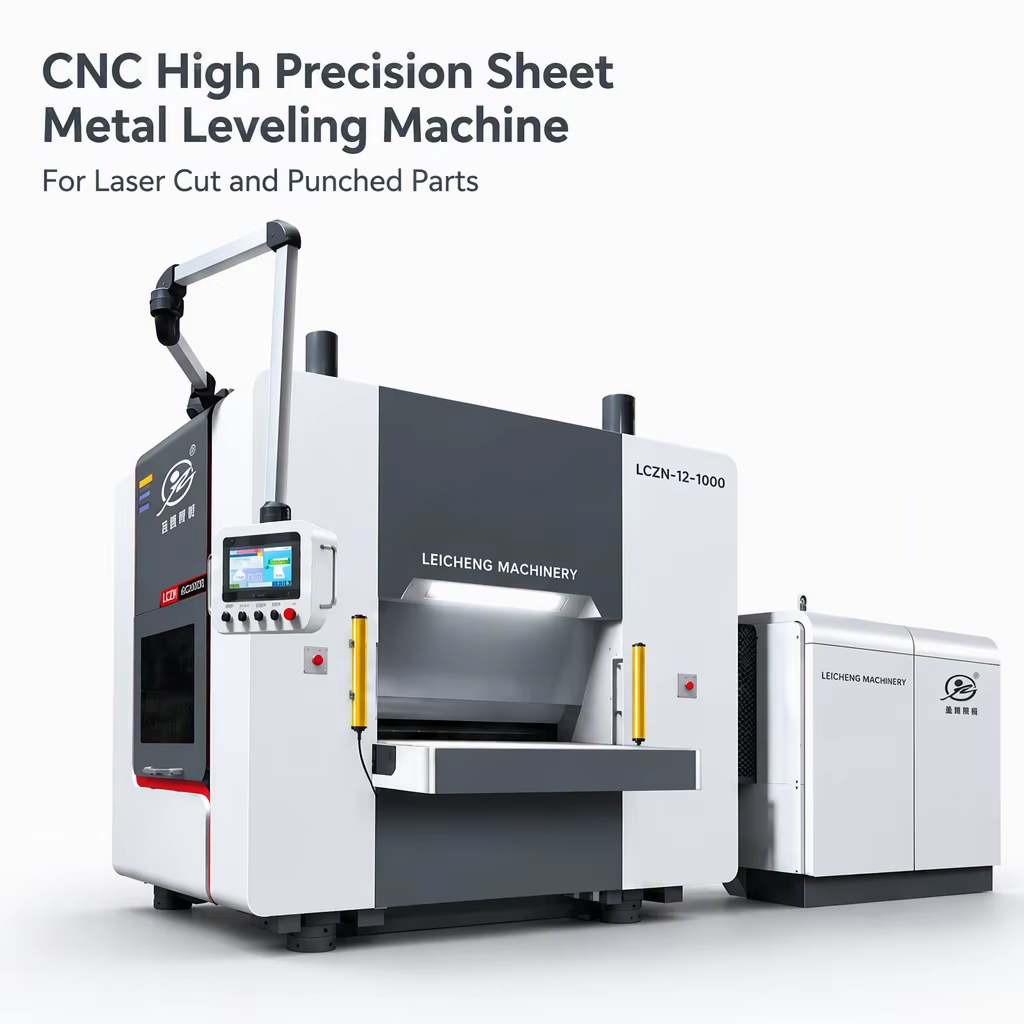
Precision Metal Sheet Leveling Machine
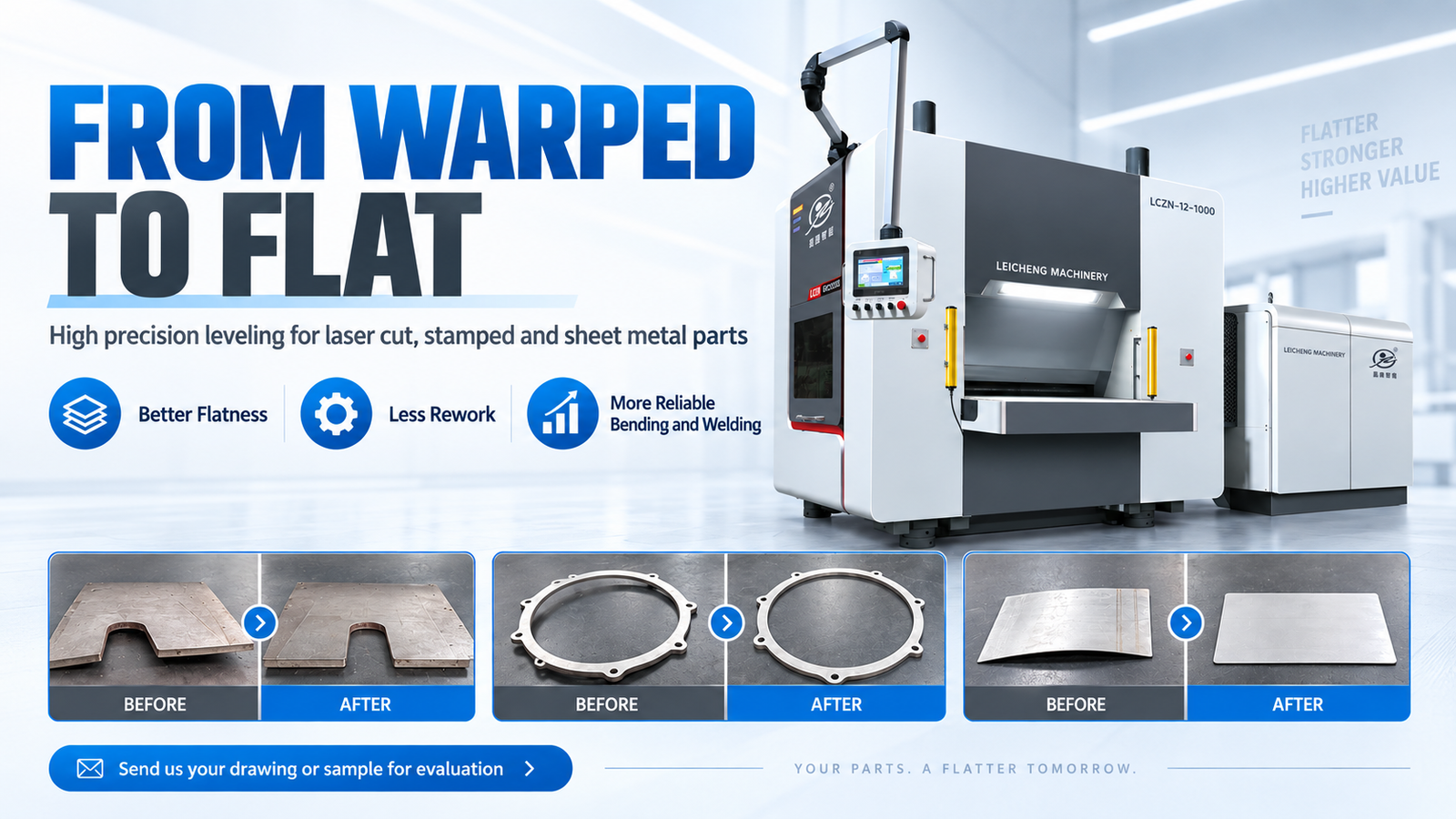
Turn warped laser-cut, punched, stamped and processed metal parts
into flatter, more stable components — ready for bending, welding,
machining and assembly.
Precision roller leveling corrects bow, wave and twisting while
reducing uneven residual stress inside the material.
It provides a faster and more repeatable solution than manually
straightening every part.
Correct bowed, wavy and twisted parts.
Create more repeatable production.
Better conditions for bending and welding.
The Problem
Why Do Metal Parts Warp After Processing?
Metal parts can deform when uneven residual stress is released
during cutting, forming or thermal processing.
Bowing, twisting and wave deformation may appear after laser
cutting, plasma cutting, flame cutting, punching, stamping,
shearing, heat treatment or other processing.
Poor flatness can then create new problems in bending, welding,
machining, deburring, robotic production and final assembly.
How It Works
How Precision Roller Leveling Works
The workpiece passes through staggered leveling rollers and undergoes
a controlled series of alternating bends.
1
Warped Part Enters
The part enters the leveling rollers with bow, wave,
twist, or residual stress.
2
Alternating Bending
Multiple staggered rollers repeatedly bend the material
in opposite directions with gradually decreasing deformation.
3
Flatter & More Stable
The process improves flatness and reduces uneven internal stress
before the next production step.
Real Applications
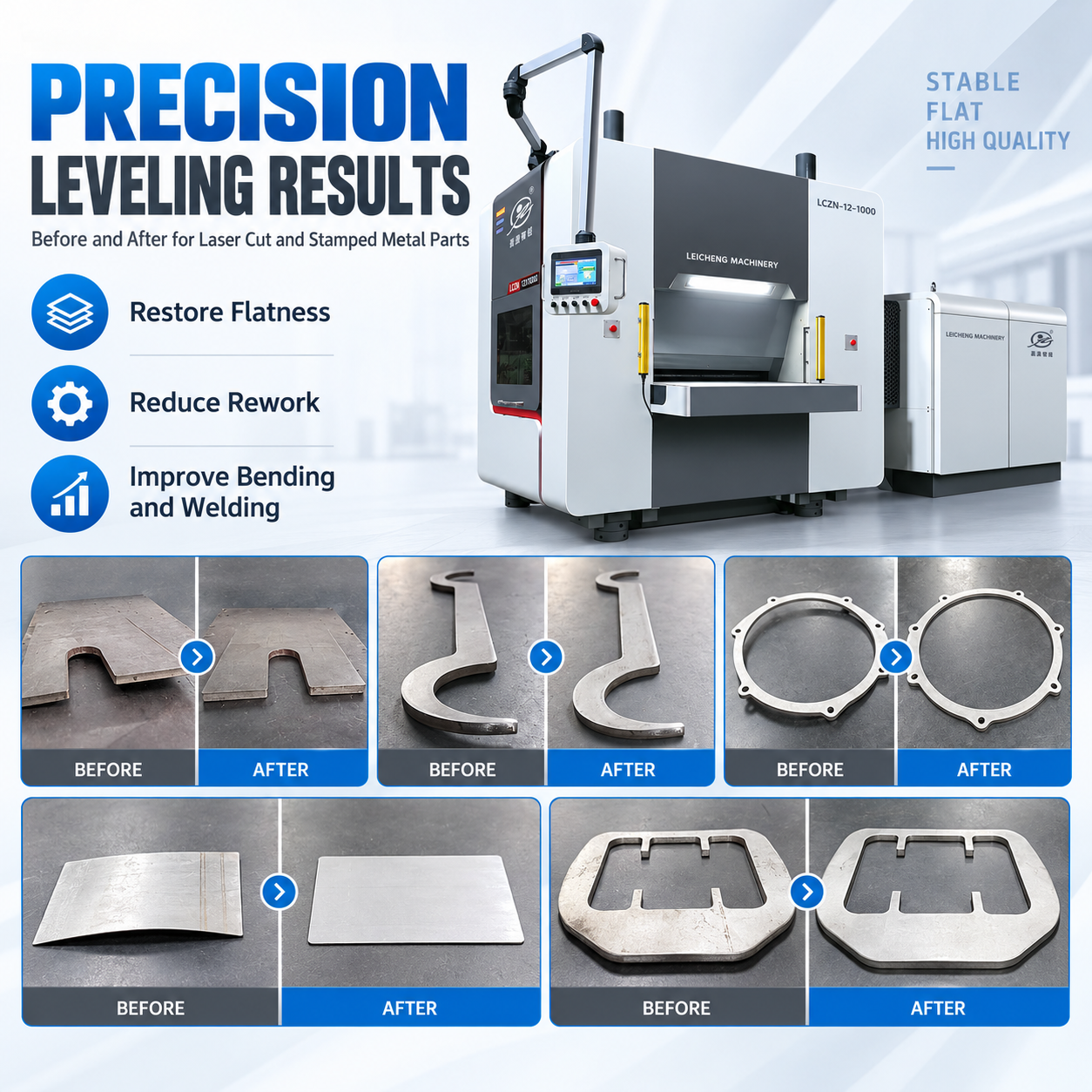
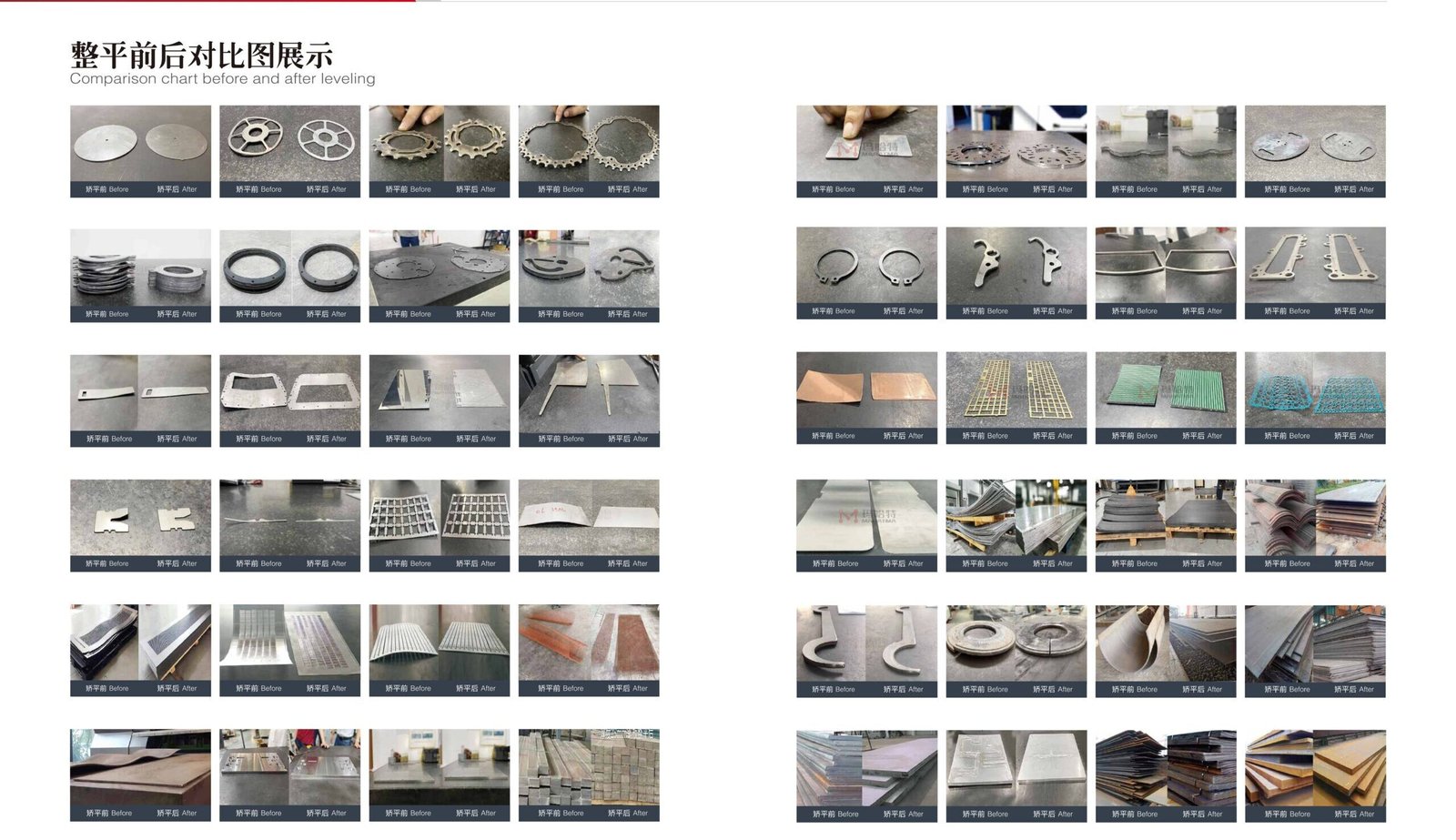
See the Difference Before and After Leveling
Different materials and different shapes may show different types
of deformation. These typical applications demonstrate how
precision roller leveling can improve part flatness.
Round Plates
Gears & Sprockets
Laser Cut Parts
Irregular Parts
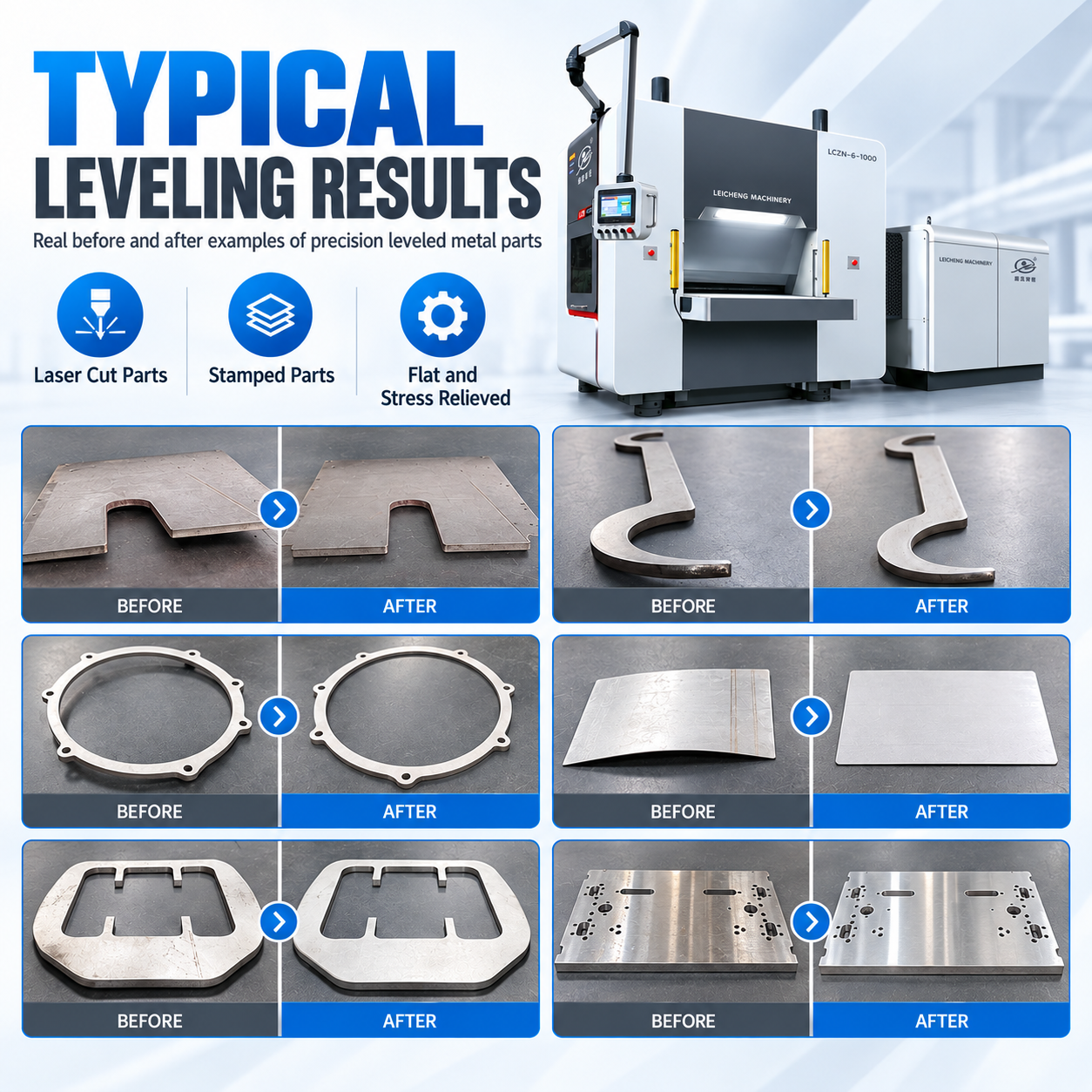
Sheet Metal Parts
Perforated Parts
Your part may be different.
Send us a photo, drawing, or sample for application evaluation.
Applications
What Parts Can Be Leveled?
Laser Cut Parts
For parts distorted after thermal cutting and stress release.
Plasma & Flame Cut Parts
Suitable configurations can be evaluated for medium
and heavy plate components.
Punched Parts
Improve flatness after punching and perforating processes.
Stamped Parts
Reduce unwanted deformation before downstream operations.
Heat-Treated Parts
Evaluate parts distorted after thermal processing.
Complex & Irregular Parts
Frames, rings, panels and special-shaped components
can be evaluated individually.
How the leveling machine makes every metal part flat one
Materials We Can Evaluate
Stainless Steel
Aluminum
Copper
High Strength Steel
Actual leveling capacity depends not only on thickness,
but also on material strength, part width, geometry,
initial deformation and required flatness.
Machine Selection
Choose the Right Leveling Solution
One machine configuration does not fit every material,
thickness and flatness requirement. We select the machine
according to your actual part and production process.
Option 01
Economical Leveling
For general flatness requirements and more
budget-sensitive applications.
Option 02
Precision CNC Leveling
Suitable for laser-cut, punched and precision
sheet metal parts requiring repeatable adjustment.
Option 03
Four-High Precision Leveling
Additional roller support improves structural rigidity
and helps reduce work-roll deflection.
Option 04
Servo Hydraulic Leveling
Designed for higher-load applications and applications
requiring stable leveling conditions for batch production.
conveyors, automatic loading and unloading, robotic handling,
roller cleaning functions, remote service and flatness inspection,
depending on the selected model and project requirements.
Model Recommendation
Tell Us About Your Part
With the right information, we can recommend a more suitable
machine and prepare a more accurate quotation.
Thickness alone is not enough for correct machine selection.
Please provide as much information as possible about your
material, workpiece and production process.
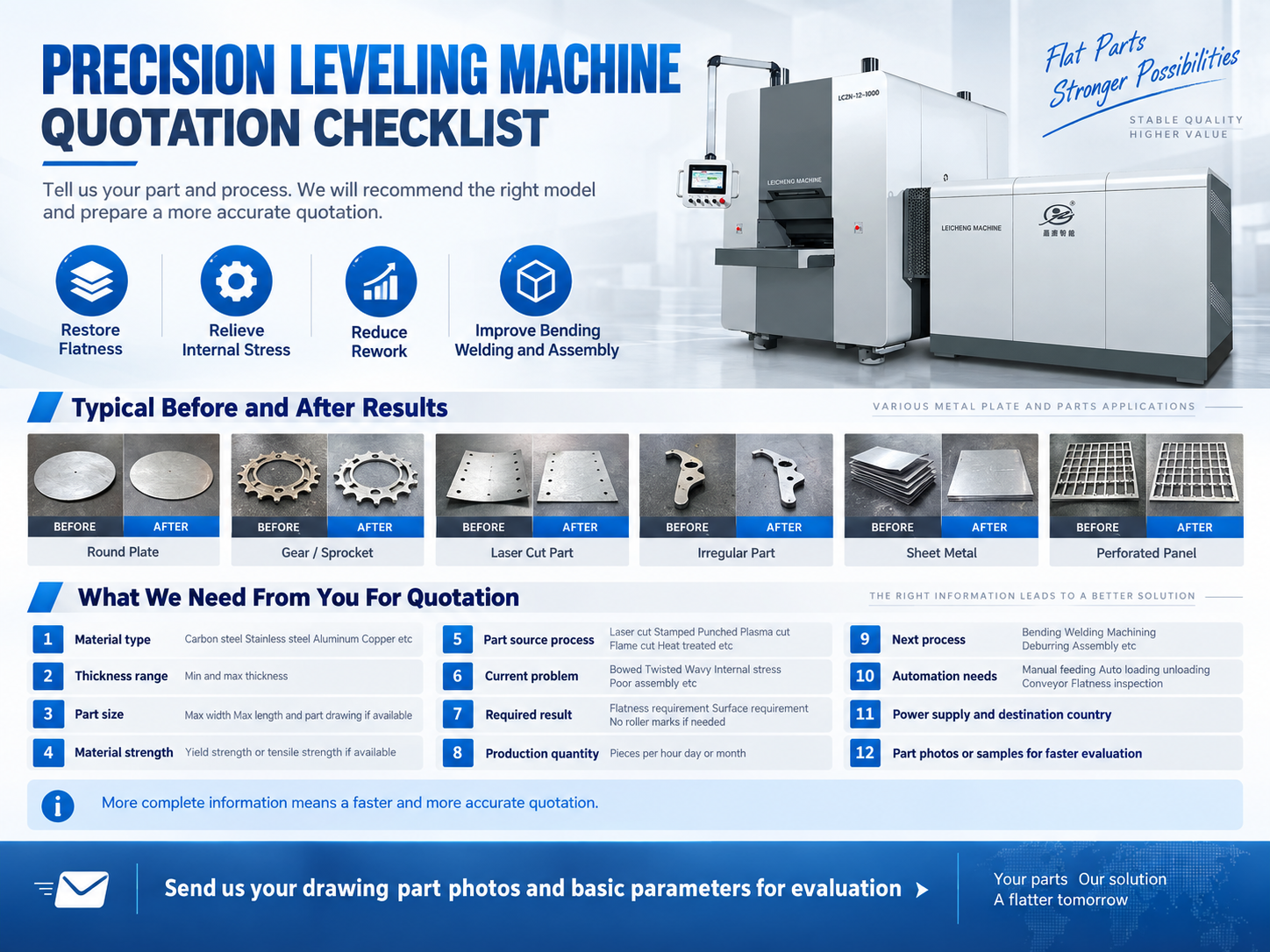
| Information | What We Need |
|---|---|
| Material Type | Carbon steel, stainless steel, aluminum, copper, high-strength steel, etc. |
| Thickness Range | Minimum and maximum thickness |
| Part Size | Maximum width and maximum length |
| Material Strength | Yield strength or tensile strength if available |
| Part Source Process | Laser cut, stamped, punched, plasma cut, flame cut, heat treated, etc. |
| Current Problem | Bowed, twisted, wavy, residual stress, poor assembly, etc. |
| Required Result | Required flatness, surface quality and whether roller marks are acceptable |
| Production Quantity | Pieces per hour, day or month |
| Next Process | Bending, welding, machining, deburring, assembly, etc. |
| Automation Requirement | Manual feeding, automatic loading/unloading, conveyor or flatness inspection |
| Power Supply & Destination | Voltage, frequency and destination country |
| Drawing / Part Photos / Sample | Strongly recommended for faster application evaluation |
More complete information means a faster and more accurate quotation.
For applications with strict flatness requirements, actual sample
evaluation is recommended before final machine configuration.
Precision Leveling Machine FAQs
Can one leveling machine handle all thicknesses?
Not always. A very wide thickness range may require different
roller diameters, roller arrangements or machine structures.
The actual material, strength and thickness range should be
confirmed before machine selection.
Can the machine level laser-cut parts?
Yes. Laser-cut parts are a typical application for precision
roller leveling, especially where cutting releases residual stress
and causes bowing or distortion.
Can stainless steel and aluminum parts be leveled?
Suitable configurations can be evaluated for stainless steel,
aluminum and other materials. Surface requirements should be
confirmed in advance, particularly where scratches or roller marks
are not acceptable.
Can irregular-shaped parts be processed?
Many irregular laser-cut, punched and stamped parts can be evaluated.
Please send a drawing or clear part photo so that we can check the
geometry before recommending a machine.
Can the machine be integrated into an automatic line?
Depending on the application, conveyors, automatic loading and
unloading, robotic handling and flatness inspection can be
incorporated into a production solution.
Can you guarantee the final flatness?
Final flatness depends on material type, strength, thickness,
part geometry, initial deformation and machine configuration.
For strict flatness requirements, the target should be confirmed
before quotation and actual sample evaluation is recommended.
Have a Warped Part?
Let us evaluate it before you choose a machine.
Send us your material, thickness, part size, drawing or photo
and required flatness. We will review the application and recommend
a suitable precision leveling solution.