Sheet Metal Folding Machine Guide
Manual, Pneumatic TDF, Hydraulic Electric: What Is the Difference and How to Choose folding?
Folding machines are widely used in sheet metal fabrication, HVAC duct production, roofing work, electrical cabinet manufacturing, and light metal processing.
However, many buyers are not sure whether they should choose a manual folding machine, a pneumatic TDF folding machine, or a hydraulic folding machine.
This article explains the main differences between these three types of folding machines and helps you select the most suitable solution according to your material, thickness, working length, production volume, and application.
1. What Is a Folding Machine?
A folding machine is used to bend or fold the edge of sheet metal into a required angle or shape. Compared with a press brake, a folding machine is often easier to operate for long straight bends and is especially suitable for thin sheet metal processing.
Common materials processed by folding machines include:
- Galvanized sheet
- Carbon steel sheet
- Stainless steel sheet
- Aluminum sheet
- Pre-painted steel sheet
Typical applications include:
- HVAC air duct fabrication
- Sheet metal box production
- Roofing and flashing work
- Electrical cabinet panels
- Light metal fabrication
- Edge folding and flange forming
Important: The right folding machine is not always the most expensive one.
It should match your real material, sheet thickness, bending length, production volume, and final product application.
2. Four Common Types of Folding Machines
Low Cost
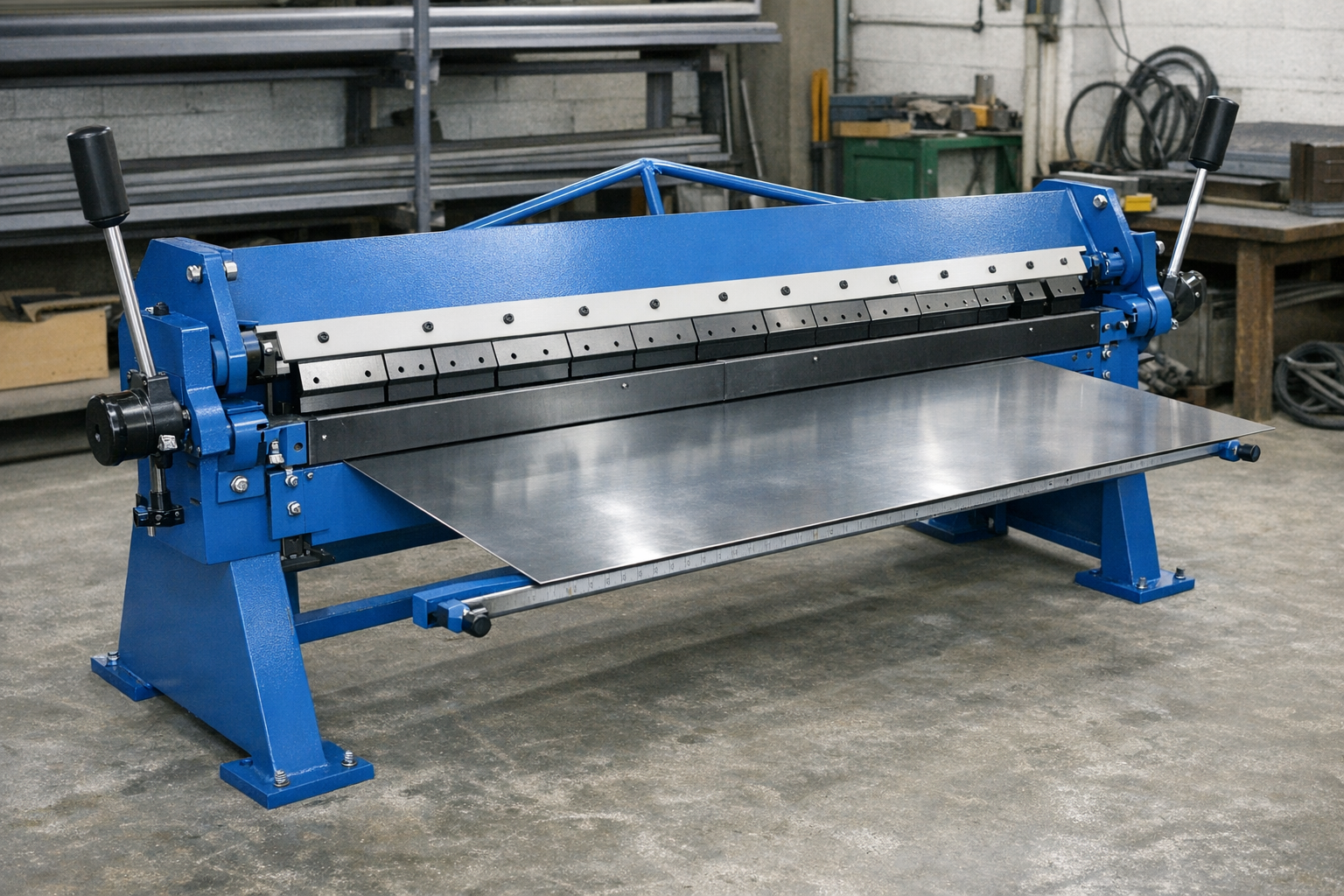
1. Manual Folding Machine
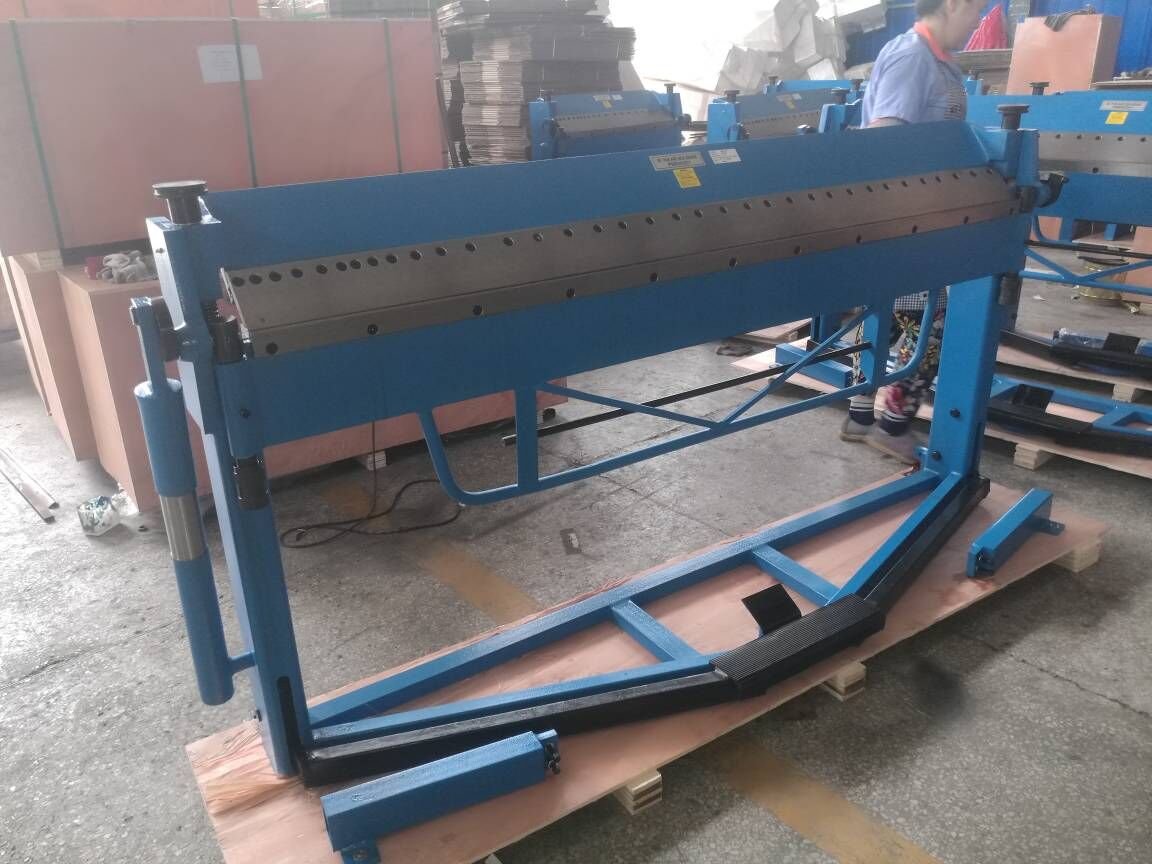
A manual folding machine is operated by hand. It has a simple structure, low purchase cost, and easy maintenance.
It is suitable for small workshops, repair work, and low-volume sheet metal folding.
HVAC Duct
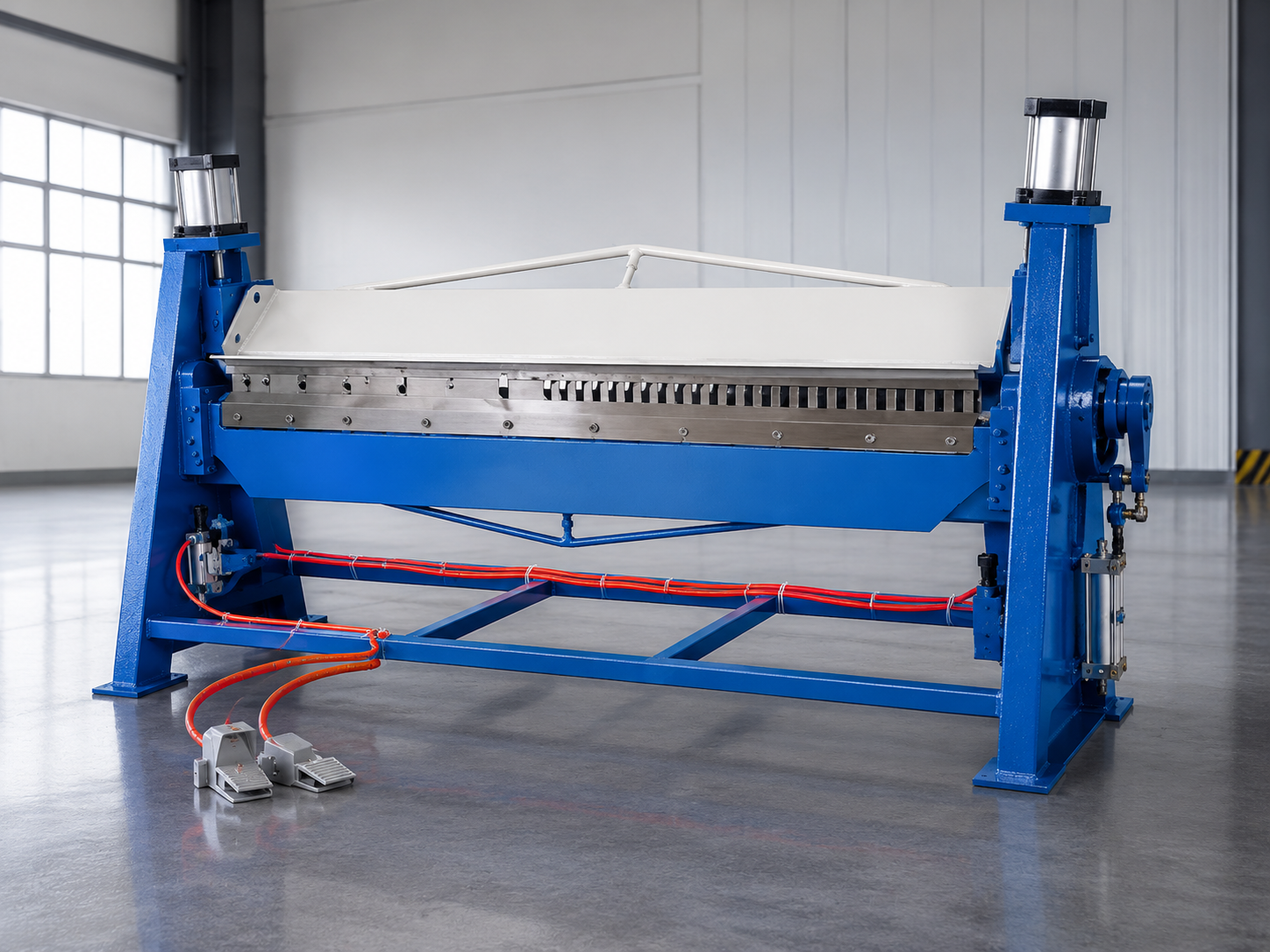
2. Pneumatic TDF Folding Machine
A pneumatic TDF folding machine is driven by compressed air and is mainly used for HVAC duct fabrication.
It is efficient, practical, and suitable for TDF flange forming and galvanized duct sheet folding.
Heavy Duty
3. Electric Folding Machine
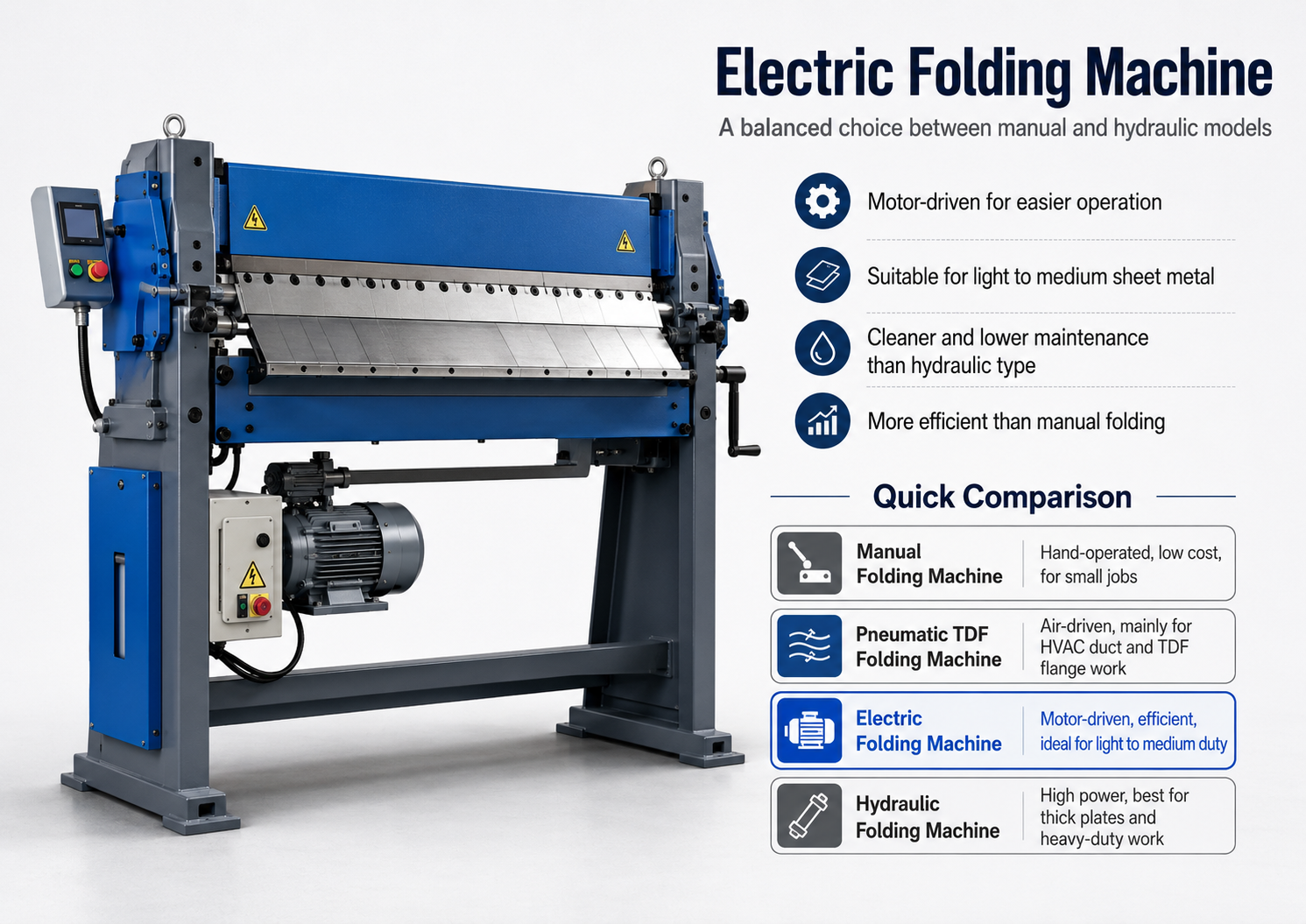
Electric Folding Machine
An electric folding machine is driven by a motor, making operation easier and more efficient than a manual machine.
It is a practical choice for light to medium sheet metal work, offering a good balance between cost, efficiency, and performance.
Difference from the other 3 types:
Manual Folding Machine
Hand-operated, low cost, suitable for small jobs and simple work.
Pneumatic TDF Folding Machine
Air-driven, mainly used for HVAC duct and TDF flange folding.
Electric Folding Machine
Motor-driven, easier to use than manual type, cleaner and lower maintenance than hydraulic type, ideal for light to medium duty work.
Hydraulic Folding Machine
More powerful, suitable for thicker plates and heavy-duty industrial applications.
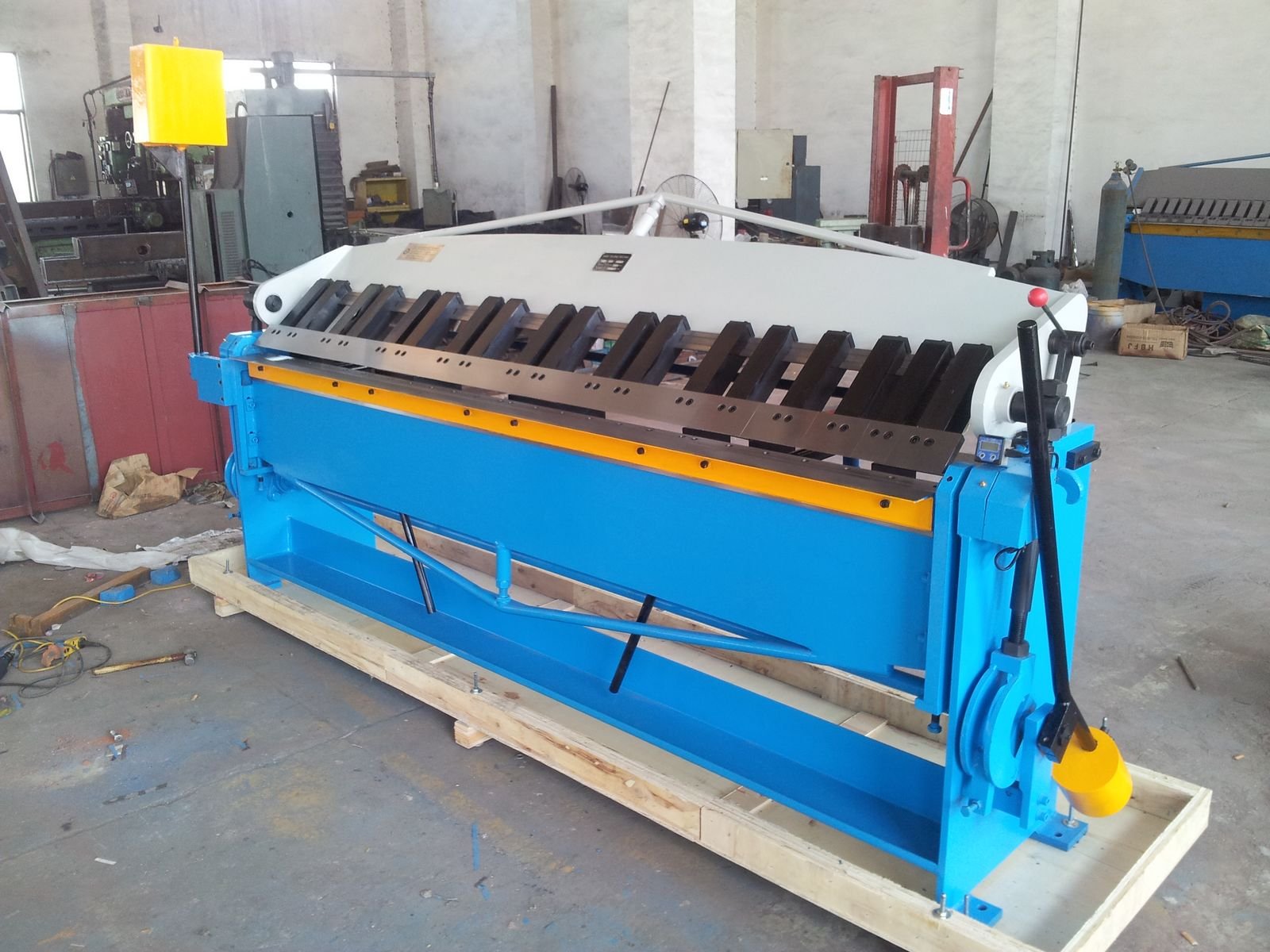
4. Hydraulic Folding Machine
A hydraulic folding machine uses hydraulic power for clamping and bending.
It provides stronger bending capacity and is suitable for thicker sheet metal, stainless steel, and industrial fabrication.
User comments
3. What Does TDF Mean?
TDF means Transverse Duct Flange. It is commonly used in HVAC rectangular air duct fabrication.
In duct production, TDF flange forming allows sheet metal duct sections to be connected more conveniently and tightly.
A pneumatic TDF folding machine is specially designed for air duct workshops that need to fold galvanized sheet edges and form duct flange structures efficiently.
4. Manual Folding Machine
A manual folding machine is the simplest and most economical option. It does not require hydraulic power or compressed air.
The operator manually clamps and folds the sheet metal.
Advantages
- Low purchase cost
- Simple structure
- Easy operation and maintenance
- No air compressor or hydraulic system required
- Suitable for small workshops and light-duty work
Limitations
- Lower working efficiency
- More labor required
- Not suitable for thick plates
- Bending consistency depends more on the operator
A manual folding machine is suitable for users who mainly process thin sheets and only need occasional or small-batch production.
5. Pneumatic TDF Folding Machine
A pneumatic TDF folding machine is mainly used in HVAC duct production.
It uses compressed air to control clamping and folding, usually operated by foot pedal.
Compared with a manual folding machine, it improves efficiency and reduces operator labor.
Advantages
- Efficient for HVAC duct fabrication
- Suitable for TDF flange forming
- Easy foot pedal operation
- Good for thin galvanized sheet folding
- Lower cost than hydraulic folding machines
- Simple maintenance compared with hydraulic systems
Limitations
- Requires an air compressor
- Mainly suitable for thin sheet metal
- Not ideal for heavy-duty thick plate bending
- Actual bending thickness depends on material type and bending length
This machine is a cost-effective choice for air duct workshops, ventilation duct manufacturers, and HVAC contractors.
6. Hydraulic Folding Machine
A hydraulic folding machine uses hydraulic power for clamping and bending.
It is stronger and more stable than manual or pneumatic models, making it suitable for medium-duty and heavy-duty sheet metal fabrication.
Advantages
- Strong bending capacity
- Suitable for thicker sheet metal
- More stable bending performance
- Higher production efficiency
- Better forming consistency
- Suitable for industrial sheet metal fabrication
Limitations
- Higher machine cost
- Requires hydraulic system maintenance
- Larger machine size
- Higher power consumption
A hydraulic folding machine is recommended for customers who process carbon steel, stainless steel, thicker sheets, or require stable long-term industrial production.
7. Main Differences Between Manual, Pneumatic TDF, and Hydraulic Folding Machines
| Item | Manual Folding Machine | Pneumatic TDF Folding Machine | Hydraulic Folding Machine |
|---|---|---|---|
| Power Type | Manual operation | Compressed air | Hydraulic power |
| Main Application | Simple sheet folding | HVAC duct / TDF flange forming | Medium and heavy sheet folding |
| Working Efficiency | Low to medium | Medium to high | High |
| Bending Capacity | Light-duty | Thin sheet / duct sheet | Stronger bending capacity |
| Machine Cost | Lowest | Medium | Highest |
| Maintenance | Very simple | Simple | More professional |
| Best For | Small workshops and occasional use | HVAC duct workshops | Industrial fabrication workshops |
8. How to Choose the Right Folding Machine
Choose Manual Folding Machine If:You have a limited budget, low production volume, and mainly process thin sheets for simple folding work.
Choose Pneumatic TDF Folding Machine If:Your main business is HVAC duct fabrication, especially galvanized sheet folding and TDF flange forming.
Choose Hydraulic Folding Machine If:You need to bend thicker sheet metal, stainless steel, carbon steel, or require stable industrial production.
Check Before Buying:Confirm material type, sheet thickness, bending length, bending angle, production volume, and whether full-length bending is required.
9. Quick Selection Table
| Your Requirement | Recommended Machine |
|---|---|
| Lowest budget and simple folding | Manual Folding Machine |
| Small workshop and occasional use | Manual Folding Machine |
| HVAC air duct production | Pneumatic TDF Folding Machine |
| TDF flange forming | Pneumatic TDF Folding Machine |
| Thin galvanized sheet folding | Pneumatic TDF Folding Machine |
| Thicker sheet metal bending | Hydraulic Folding Machine |
| Stainless steel sheet processing | Hydraulic Folding Machine |
| Industrial sheet metal fabrication | Hydraulic Folding Machine |
10. Conclusion
Manual folding machines, pneumatic TDF folding machines, and hydraulic folding machines each have their own advantages.
A manual folding machine is simple and economical.
A pneumatic TDF folding machine is practical and efficient for HVAC duct production.
A hydraulic folding machine is stronger and more suitable for industrial sheet metal fabrication.
Before selecting a machine, buyers should carefully confirm their material, thickness, working length, application, and production requirement.
This helps avoid choosing an oversized machine or a machine that cannot meet the real working condition.
Need Help Choosing a Folding Machine?
If you are not sure which folding machine is suitable for your project, please send us your sheet material, thickness, working length, product drawing, and application.
We can help you recommend a practical and cost-effective solution.